

Banner
Menu

Number Of Homes For Sale Declines As Winter Nears


Temperature isn’t the only thing that falls when the seasons change. If you follow the housing market, you know that the number of active buyers and available listings also begin to fall. It makes sense. The school year, the approaching holidays, and colder weather all have an effect on our willingness to buy or sell a home. And while this year’s market has been hotter than normal, that doesn’t mean we won’t see the same seasonal trends as we head into winter. According to one recent report, it may already be happening. In fact, the report shows that the number of homes for sale dropped in October across every price segment. But while that may be true, the price range you’re in will determine how many options you’ll find, if you’re house hunting this fall. For example, the number of available homes for sale under $200,000 has fallen 18.1 percent in the past year, while homes between $200,000 and $400,000 are down less than 1 percent. And as your price range rises, so do the number of listings. Year-over-year, homes between $400,000 and $600,000 are actually up, increasing 31.2 percent over the past 12 months. Similarly, homes between $600,000 and $1,000,000 rose 48.3 percent. (source)


Close-up of intricate frost patterns on a windowpane.

Typical Home Sale Generates $100,000 In Profit


Unless you’re a real-estate investor, your primary focus when buying or selling a home shouldn’t be profit. Your home, after all, is more than a mere investment. It’s where you spend your life. But while your motivation may not be money, new numbers from ATTOM Data Solutions show that it could be a nice side benefit. Their third-quarter 2021 U.S. Home Sales Report found that the typical home sold this summer generated a profit of $100,178. That’s up from $88,800 in the second quarter and $69,000 at the same time last year. In short, the market was hot. So hot, in fact, that median home prices rose year-over-year in 93 percent of metros with enough data to analyze. Todd Teta, ATTOM’s chief product officer, says the gains are nothing new. “The third quarter of this year marked another period in a banner year for a housing market boom that’s steaming ahead through its 10th year,†Teta said. “Prices and seller profits again hit new highs since the market started coming back from the Great Recession in 2012.†According to Teta, though there have been signs of a possible slowdown in recent months, housing market gains look poised to continue for the foreseeable future. (source)

Four $100 bills featuring Benjamin Franklin.

Mortgage Loan Demand Falls 3.3 Percent


According to the Mortgage Bankers Association’s Weekly Applications Survey, average mortgage rates fell last week for the first time since August. Rates were down across all loan categories, including 30-year fixed-rate loans with both conforming and jumbo balances, loans backed by the Federal Housing Administration, and 15-year fixed-rate loans. But despite declining rates, demand for mortgage loan applications fell 3.3 percent from the week before. Joel Kan, MBA’s associate vice president of economic and industry forecasting, said rates fell later in the week, which may explain why demand declined despite the drop. “Mortgage rates decreased for the first time since August, as concerns about supply-chain bottlenecks, waning consumer confidence, weaker economic growth, and rising inflation pushed Treasury yields lower,†Kan said. “Most of the decline in rates came later in the week, which is likely why refinance applications declined to the lowest level since January 2020, and the overall share of activity fell to the lowest since July 2021.†The MBA’s weekly survey has been conducted since 1990 and covers 75 percent of all retail residential mortgage applications. (source)

Red stylized geometric arrow symbol inside a black frame.

How Do Today’s Rates Compare To Years Past?


When you buy most things, you only have to consider their price. Buying a home is different. Whether or not a home is affordable depends on a number of factors beyond the list price. Mortgage rates, for example. The mortgage rate you lock in when you purchase your home helps determine how much your monthly payment will be. Which means, it’s important for home buyers to know where rates are and where they may be headed. In recent years, rates have been low. How low? Well, by historical standards, very low. According to Freddie Mac, rates in the 1970s ranged between 7 and 9 percent, before skyrocketing in the early 1980s, when they reached as high as 18 percent. And even though they calmed down in the 1990s and 2000s, they didn’t fall below 5 percent until 2009, following the financial crisis and housing crash. Since then, rates have remained low. In fact, rates over the past few years have been lower than they’ve been at any point in the past 40 years – which is great news for anyone looking to refinance their loan or purchase a home. (source)

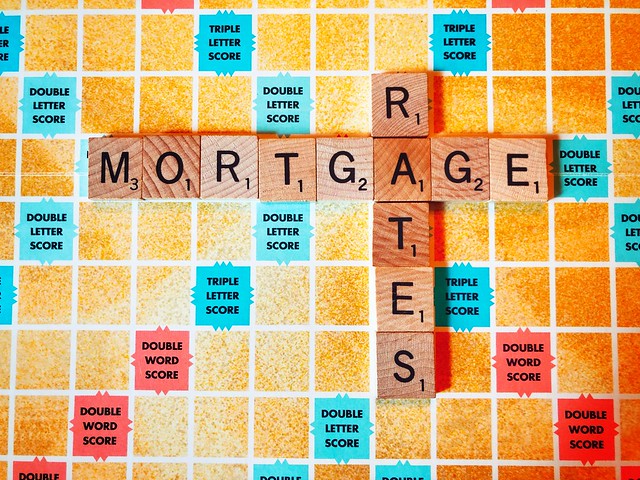
Scrabble tiles on a colorful board spelling out mortgage-related words.

Fewer Buyers Look To Move Metros In 3rd Quarter


For a number of reasons, the coronavirus pandemic caused many Americans to rethink their living situation. Remote work and more time at home meant many of us began thinking about moving somewhere new, further from city centers where we could have more space for less money. But now, more than a year and a half later, the surging interest in moving metros looks like it’s starting to wane. In fact, according to newly released data, 30.2 percent of prospective buyers looked at homes in a new area during the third quarter. That’s down from 31.1 percent in the second quarter. It was the second-straight quarter interest in relocation dropped following a year’s worth of increases. But while it has begun to decline, it’s still higher than pre-pandemic numbers. And because flexible-work policies continue to give workers more options, it’s unlikely to fall back to where it was before the pandemic’s onset. So where are the most popular locations for buyers who are looking for a change? Well, the numbers show Miami, Phoenix, Sacramento, Las Vegas, and Tampa were the most popular areas for migrating Americans. (source)

Brick house with chimney under a clear blue sky beside a palm tree.

Contracts To Buy Down In September


Buying a house takes some time. Typically, there are several weeks between the time an offer is accepted and the deal is closed. That’s why contract signings are a closely watched measure of housing-market health. They’re a good indicator of future home sales and a gauge of how busy the market currently is. The National Association of Realtors tracks contract signings with their monthly Pending Home Sales Index. In September, it showed a 2.3 percent decrease from the month before, pushing it 8 percent lower than the same time last year. So what does this mean? Well, according to Lawrence Yun, NAR’s chief economist, it’s likely a sign that home buyers were becoming less active as the summer market wrapped up. “Contract transactions slowed a bit in September and are showing signs of a calmer home price trend, as the market is running comfortably ahead of pre-pandemic activity,’ Yun said. “Some potential buyers have momentarily paused their home search with intentions to resume in 2022.†Fewer active buyers could be good news, though, as it would help slow down price increases and reduce competition for home shoppers looking to buy before the end of the year. (source)

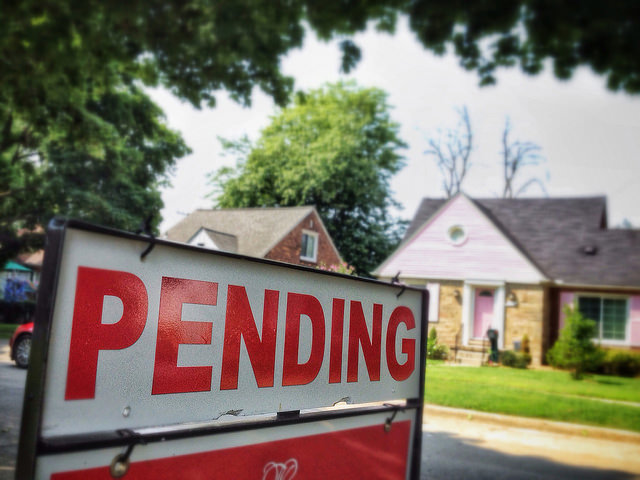
A real estate pending sale sign in front of a suburban house.

Home Prices Still Rising But At A Slower Pace


The S&P Case-Shiller Home Price Indices is considered among the leading measures of U.S. home prices. Their data covers all nine census divisions and has been collected for nearly 30 years. According to their most recent release, home prices continue to increase but have begun to decelerate. In fact, both the 10-city and 20-city composite indexes showed a slower rate of increase in August than they did the month before. Still, S&P’s managing director and global head of index investment strategy, Craig Lazzara, says price growth remains strong. “The U.S. housing market showed continuing strength in August 2021,†Lazarra said. “Every one of our city and composite indices stands at its all-time high, and year-over-year price growth continues to be very strong, although moderating somewhat from last month’s levels.†The national index shows prices up nearly 20 percent from one year ago. Among individual cities, Phoenix experienced the biggest gains, with San Diego, Tampa Bay, Dallas, and Seattle rounding out the top five cities with the biggest increases. (source)

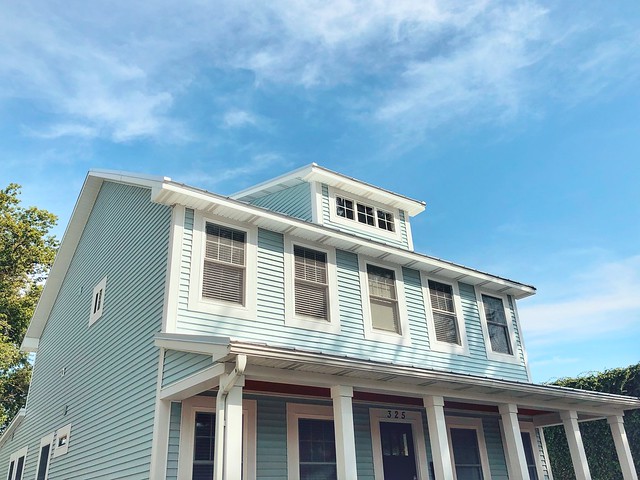
Bright blue house with white accents under a clear sky.

Home Purchase Demand Rises As Rates Climb


According to the Mortgage Bankers Association’s Weekly Applications Survey, average mortgage rates increased last week from one week earlier. Rates were up for 30-year fixed-rate loans with both conforming and jumbo balances, loans backed by the Federal Housing Administration, and 15-year fixed-rate loans. The increases continued an upward trend that started last month. They also pushed rates to their highest level since February. But despite higher rates, home buyers remained active. In fact, demand for home-purchase loans rose 4 percent from one week earlier. Joel Kan, MBA’s associative vice president of economic and industry forecasting, says most of the home-buying activity is at the higher end of the market. “Purchase applications picked up slightly, and the average loan size rose to its highest level in three weeks, as growth in the higher price segments continues to dominate purchase activity,†Kan said. “Both new and existing-home sales last month were at their strongest pace since early 2021, but first-time home buyers are accounting for a declining share of activity.†The MBA’s survey has been conducted weekly since 1990 and covers 75 percent of all retail residential mortgage applications.

White arrow painted on rough asphalt pointing upwards.

New Home Sales Hit 6-Month High In September


In September, sales of newly built single-family homes increased 14 percent from the month before, according to new numbers from the U.S. Census Bureau and the Department of Housing and Urban Development. The improvement exceeded economists’ expectations and pushed sales to their highest level since March. But despite the gains, new home sales are still 17.6 percent lower than they were at the same time last year. Why? Well, affordability is a big part of the reason sales trail last year’s pace. For example, the median price of a new home has risen 18.7 percent over the past year. And the majority of new homes sold are in the $200,000 to $749,000 price range, with just 2 percent of September sales falling in the under-$200,000 price range. Still, sales increased in just about every region of the country, with the South, West, and Northeast all seeing improvements. The Midwest was the only region that didn’t see an increase in September. (source)

A cozy house under a dramatic cloudy sky at sunset.

Report Tracks Which Markets Face Pandemic Risks


The housing market has remained remarkably strong throughout the coronavirus pandemic. But while it rebounded quickly and has stayed hot since, the market still faces pandemic-related risks. That’s why ATTOM Data Solutions releases a report each quarter, tracking the pandemic’s effects and which markets are most threatened. Todd Teta, ATTOM’s chief product officer, says the risks aren’t immediate but are still worth watching. “It’s important to stress that this doesn’t mean that any one area faces imminent danger, especially given how well the housing market has avoided major problems during the pandemic,†Teta said. “Rather, some are more at risk than others.†Teta cites home prices, affordability, and the number of distressed properties as a few of the biggest vulnerabilities. And, according to the report, the most at-risk markets were found in the New York, Chicago, and Philadelphia metro areas, as well as in the state of Delaware. Among the least at-risk counties, Oregon led the list with six, with Texas close behind with five counties. Other metro areas that were counted among the least vulnerable included Denver, Kansas City, Minneapolis, Richmond, Nashville, Phoenix, and Charlotte. (source)

City skyline with modern skyscrapers under a clear sky.

Thank you for your upload