

Banner
Menu

Category: Uncategorized

The Home Features Buyers Want Most


Whenever potential home buyers are asked what they most want in a new house, their responses tend to favor utility and function. It seems, when looking for a house to buy, luxury takes a backseat to lower energy bills and more storage space for most buyers. In fact, according to a recent survey of home shoppers, more than 80 percent agreed on a few familiar features they desired above all others. For example, a separate laundry room was named by 92 percent of buyers as a must in their next house. Having a dedicated area for collecting and cleaning laundry was a nearly unanimous choice and popular across all age groups and demographics. Energy efficient appliances and windows were also near the top of the list, as was garage storage space – proving that, more than a gold-trimmed master suite, Americans want lower bills and places to store their stuff. But not all of the most-loved home features were purely utilitarian. In fact, 84 percent of respondents named outdoor living space among their must haves. A nice yard, patio, or deck provides outside space to enjoy and a place to entertain friends and family. Rounding out the list, exterior lighting, an eat-in kitchen, and hardwood floors were all near the top of buyers’ wish lists. More here.
A brick chimney against a sky with text about what home buyers want most.

Majority Of Markets Show Improving Trend


Of the top 100 metropolitan areas included in Freddie Mac’s Multi-Indicator Market Index, 84 percent are showing an improving three-month trend. The index – which compares current housing conditions to long-term norms – also found 42 of the 50 states on the upswing. Len Kiefer, Freddie Mac’s deputy chief economist, says it was the 50th straight month the index registered year-over-year gains. “Nationally, MiMi in June was largely unchanged at 85, marking a 5.76 percent year-over-year increase and the 50thconsecutive month of year-over-year increases,†Kiefer said. “Low mortgage rates and consistent job gains are helping to bolster home buyer demand, which is reflected in the MiMi purchase applications indicator. Purchase applications, as measured by MiMi, rose 1.75 percent month-over-month in June to the highest level since December 2007.†But though the index’s results are definitely positive, the upward trend was even stronger last year at this time when all of the top 100 metros were showing gains. Also in the report, the most improved metropolitan areas since last year at this time include Orlando, Denver, Tampa, Chattanooga, and Dallas. Among states, Oregon, Colorado, Florida, Tennessee, and New Jersey lead the list. More here.

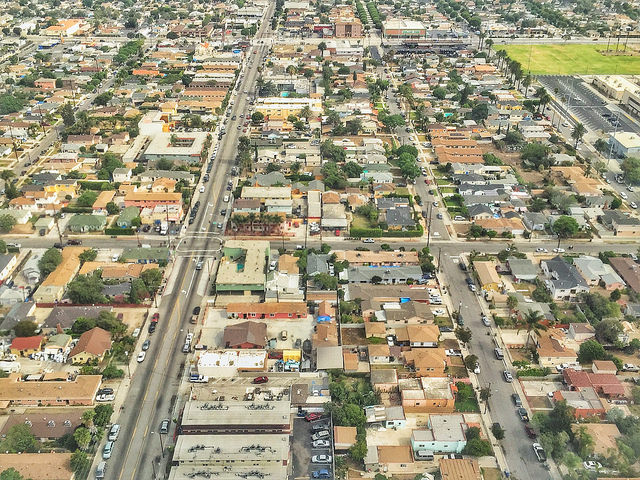
Aerial view of a residential neighborhood with grid-like streets and houses.

Pending Home Sales Bounce Back In July


The National Association of Realtors’ Pending Home Sales Index measures the number of contracts to buy homes each month. Because the index tracks contract signings, and not closings, it is a good indicator of future existing home sales and an important barometer for the housing market. In July, pending sales rose 1.3 percent and reached the second highest reading in more than a decade. Lawrence Yun, NAR’s chief economist, says the news is encouraging but things could be even better. “Amidst tight inventory conditions that have lingered the entire summer, contract activity last month was able to pick up at least modestly in a majority of areas,†Yun said. “More home shoppers having success is good news for the housing market heading into the fall, but buyers still have few choices and little time before deciding to make an offer on a home available for sale. There’s little doubt there’d be more sales activity right now if there were more affordable listings on the market.†Regionally, the West, South, and Northeast all saw increases, with the West registering the largest gains. The Midwest was the only region that didn’t improve month-over-month. More here.

Close-up of a 'Sale Pending' sign on a glass door or window.

Mortgage Rates Hold Steady Near Lows


According to the Mortgage Bankers Association’s Weekly Applications Survey, average mortgage rates were relatively flat last week across all loan categories, including 30-year fixed-rate mortgages with both conforming and jumbo balances, loans backed by the Federal Housing Administration, and 15-year fixed-rate loans. With rates still hovering just above historic lows, demand for mortgage loan applications saw a bump over the week before. In fact, the seasonally adjusted purchase index rose 1 percent from the week before, while the refinance index – which is generally more sensitive to rate movement – saw a 4 percent increase. Michael Fratantoni, MBA’s chief economist, says with rates as low as they are, there should be an even greater increase in the number of borrowers taking advantage of favorable conditions. “The last time rates were at these levels, the refi index was almost twice as high,†Fratantoni told CNBC. “At these rate levels, there are borrowers who still stand to benefit, but there are many homeowners who have already taken advantage of refinancing and are not yet incentivized to do it again.†The MBA’s weekly survey has been conducted since 1990 and covers 75 percent of all retail residential mortgage applications. More here.

Letter tiles spelling 'MORTGAGE' on US dollar bills background.

Index Finds Home Prices Still On The Rise


The S&P Case-Shiller U.S. National Home Price Index – considered the leading measure of U.S. home prices – has been tracking home values for nearly 30 years. According to their most recent release, national home prices are up 5.1 percent year-over-year, with the biggest price increases seen in the West. David M. Blitzer, managing director and chairman of the index committee at S&P Dow Jones indices, says home prices show no sign of slowing down. “Home prices continued to rise across the country led by the West and the South,†Blitzer said. “In the strongest region, the Pacific Northwest, prices are rising at more than 10 percent; in the slower Northeast, prices are climbing a bit faster than inflation. Nationally, home prices have risen at a consistent 4.8 percent annual pace over the last two years without showing any signs of slowing.†Overall, Blitzer believes the residential real estate market is in good shape, noting improvements in housing starts and home sales. Among individual cities included in the index, Denver, Seattle, and Portland led the way with the biggest year-over-year gains in home values. More here.

Close-up of a green dollar sign symbol on a dark background.

Hot Housing Market May Cool This Fall


The housing market had a strong first of half of the year. In fact, according to Jonathan Smoke, Realtor.com’s chief economist, it was the best spring in a decade. However, a number of factors will likely cause things to slow down in the second half of the year. “As a result of a very strong spring and summer leaving us with low inventories, mortgage rates potentially moving back up, and the presidential election creating more uncertainty, we may see a weaker housing market in September, October, and November,†Smoke says. “However, given the performance so far this year, 2016 should end as the best year in a decade.†And, though things may slow down in the months ahead, that’s no reason to believe the real estate market will have a bad 2017. Smoke says housing should remain strong next year, unless there is a substantial increase in mortgage rates over a short period of time. But that type of rate increase should only occur if the economy is also strong. And, if that’s the case, then lower unemployment and higher wages should help offset the effects of higher rates. Smoke feels that positive conditions and favorable demographics will keep the housing market strong and healthy for at least two more years. More here.

Vibrant red tree next to a charming house under a bright blue sky.

Rising Rent Motivates 1st Time Buyers


According to a recent survey of potential home buyers, the cost of renting is the main motivator for almost half of all first-time buyers and nearly a quarter of respondents overall. That is nearly double what it was last year at this time. That’s mostly due to the fact that, in recent years, rent has been rising at a rapid pace and – despite the fact that home prices have also been increasing – buying a home has generally remained the more affordable choice in many markets. That, and mortgage rates that have been hovering near record lows for some time now, are driving renters to the housing market. But that doesn’t mean there still aren’t concerns about the cost of buying a home. In fact, affordability was named by 28 percent of survey participants as their top concern, with too much competition and a lack of homes to choose from following close behind. For first-time home buyers, in particular, affordability is a growing worry. For that reason, inventory levels and new home construction are the keys to the current housing market. As more homes become available for sale, the rate of price increases should begin to moderate, which will help balance the market and provide more opportunities for buyers. More here.

Close-up of various US dollar bills including $100 and $1 notes.

Sales Of Previously Owned Homes Fall 3.2%


Sales of previously owned homes fell in July after four consecutive months of increases, according to the National Association of Realtors. The 3.2 percent decline was led by a 13.2 percent drop in the Northeast. The Midwest and South also saw decreases, while the West climbed 2.5 percent from the month before. Lawrence Yun, NAR’s chief economist, says inventory and affordability are behind the decline. “Severely restrained inventory and the tightening grip it’s putting on affordability is the primary culprit for the considerable sales slump throughout much of the country last month,†Yun said. “Realtors are reporting diminished buyer traffic because of the scarce number of affordable homes on the market, and the lack of supply is stifling the efforts of many prospective buyers attempting to purchase while mortgage rates hover at historical lows.†But though July’s numbers fell, home sales are still expected to finish the year at their strongest pace since the housing crash and the number of homes available for sale actually improved during the month – though only by 0.9 percent. Currently, unsold inventory is at a 4.7-month supply at the current sales pace. A six month supply is considered healthy for the housing market. More here.

Bright yellow 'For Sale' sign against trees and sky.

Mortgage Rates See Slight Increase Last Week


According to the Mortgage Bankers Association’s Weekly Applications Survey, average mortgage rates moved up last week across all loan categories, including 30-year fixed-rate mortgages with both conforming and jumbo balances, loans backed by the Federal Housing Administration, and 15-year fixed-rate loans. The increases, though slight, were enough to cause a dip in mortgage activity. Refinance demand – which is typically more sensitive to rate increases – fell 3 percent from the previous week, while purchase activity was down 0.3 percent from the week before. But though demand was slower on a week-over-week basis, it is still up significantly from last year when mortgage rates were higher. For example, refinance demand is now 45 percent higher than at this time last year and requests for applications for loans to buy homes are nearly 8 percent above last year’s level. Unfortunately, though rates remain low and buyer demand is strong, a lower-than-typical number of homes on the market could be suppressing sales which, despite this, are on track to have their best year in a decade. The MBA’s weekly applications survey has been conducted since 1990 and covers 75 percent of all retail residential mortgage activity. More here.

White arrow painted on a textured asphalt road pointing forward.

Sales Of New Homes Surge In July


New numbers released by the U.S. Census Bureau and the Department of Housing and Urban Development show sales of new single-family houses up 12.4 percent in July from the month before. The improvement puts new home sales at a nine-year high. Rebounding strength in the housing market has analysts optimistic about the future. Millan Mulraine, deputy chief economist at TD Securities in New York, told Reuters that the residential real estate market is now one of the economy’s strongest sectors. “A very rosy picture is beginning to emerge on the housing market, pointing to sustained buoyancy in the sector’s recovery, which remains one of the few bright spots for the U.S. economy,†Mulraine said. But though sales have been strong, the number of homes being built still lags behind other housing measures, which tempers some of the optimism surrounding this year’s solid sales performance. Still, July’s gain pushed new home sales 31.3 percent higher than they were at the same time last year and beat economists’ expectations by nearly 75,000. Economists surveyed prior to the release forecast sales to fall in July. Also in the report, the median sales price of new houses sold in July was $294,600; the average sales price was $355,800. More here.

Newly sold house with a clear sky background.

Thank you for your upload