

Banner
Menu

Category: Uncategorized

Mortgage Rates Hold Steady From Last Week


According to the Mortgage Bankers Association’s Weekly Applications Survey, average mortgage rates were virtually unchanged last week from the week before. The average contract interest rate for 30-year fixed-rate mortgages with conforming loan balances was down slightly, while jumbo loans remained unchanged from the previous week. Rates on loans backed by the Federal Housing Administration saw a minor increase and 15-year fixed-rate loans fell. Overall, mortgage rates have seen little movement over the past three weeks. But, because rates have plateaued at a higher level, refinance demand is slowing. In fact, last week’s Refinance Index was down 6 percent from the week before. Michael Fratantoni, MBA’s chief economist, told CNBC, refinance activity was down, even for a holiday week. “Volume always drops significantly during Thanksgiving week,†Fratantoni said. “However, even after adjusting for the holiday, with rates little changed last week, refinance volume slipped to its lowest level since late July.†On the other hand, demand for home purchase loans was up 8 percent. The MBA’s weekly survey has been conducted since 1990 and covers 75 percent of all retail residential mortgage applications. More here.


Letters spelling 'MORTGAGE' on US dollar bills.

Green Homes Grow In Popularity


A growing percentage of home builders say they are currently building green homes and expect to build more in the future. A study, conducted in partnership with the National Association of Home Builders, surveyed 232 builders and remodelers and found that 54 percent of home builders are currently constructing at least 16 percent of their new homes green and over half expect to be doing 60 percent or more of their homes by 2020. Tom Woods, NAHB’s chairman, says there’s a growing demand for green homes. “Builders and remodelers have long recognized that green is the future of home building,†Woods said. “Since we first began partnering on this study, we’ve seen that commitment grow. The study’s recent findings reinforce this continued growth, with new homeowner feedback showing a desire and expectation that new homes be high-performing, particularly when it comes to energy conservation.†In addition to the money that can be saved through energy efficiency, builders believe home buyers associate green homes with healthier living and will pay more for homes that are healthier. More here.

A chimney covered in green ivy against a bright blue sky.

Contracts To Buy Homes Inch Higher


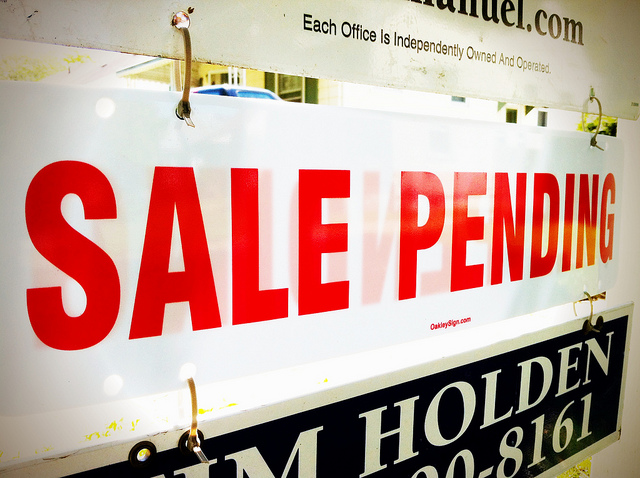
The National Association of Realtors’ Pending Home Sales Index measures the number of contracts to buy homes signed during the month. Because it tracks signings, and not closings, it’s considered a good gauge of upcoming home sales. In October, the Index was virtually flat, rising just 0.2 percent from the month before. It is now 3.9 percent higher than at the same time last year. Lawrence Yun, NAR’s chief economist, says pending sales have plateaued due to there not be enough homes available for sale. “Contract signings in October made the most strides in the Northeast, which hasn’t seen much of the drastic price appreciation and supply constraints that are occurring in other parts of the country,†Yun said. “In the most competitive metro areas – particularly those in the South and West – affordability concerns remained heightened as low inventory continues to drive up prices.†In fact, regional estimates do show pending sales up 4.5 percent in the Northeast. On the other hand, contract signings rose just 1.7 percent in the West, while the Midwest and South both saw declines. More here.

A red and white 'Sale Pending' sign clipped to a wire.

New Home Sales Bounce Back In October


After a disappointing September, sales of newly built, single-family homes rebounded strongly in October, according to new estimates released jointly by the U.S. Census Bureau and the Department of Housing and Urban Development. Sales rose 10.7 percent over the month before and are now 4.9 percent higher than they were at the same time last year. The rebound offers evidence that the housing market is still solid, despite recent declines in builder confidence, housing starts, and sales of previously owned homes. Also encouraging, the number of new homes for sale increased in October, reaching its highest level since March 2010. Any boost in supply is good news, as it provides buyers with more choices, helps balance the market, and moderates home price increases. And a closer look at the numbers reveals that new home prices have fallen from one year ago. In fact, the median price of a new home was down 6 percent, dropping to $281,500. Also, regional results show a record sales increase in the Northeast, where new home sales were up 135.3 percent. Sales also rose in the South and Midwest, while falling slightly in the West. More here.

A house under construction on a clear day.

Latest Survey Finds Mortgage Rates Down


According to the Mortgage Bankers Association’s Weekly Applications Survey, average mortgage rates fell last week across all loan categories, including 30-year fixed-rate loans with both conforming and jumbo balances, loans backed by the Federal Housing Administration, and 15-year fixed-rate mortgages. The decline follows four consecutive weeks of increases. Despite lower rates, however, mortgage application demand fell from the previous week. In fact, the Refinance Index was down 5 percent and the Purchase Index – which is a good indicator of future home sales – was down 1 percent, though it remains 24 percent higher than at the same time last year. Michael Fratantoni, MBA’s chief economist, told CNBC demand for higher priced homes is still outpacing applications for more affordable homes. “Average purchase loan size climbed to a new survey high last week, as the higher end of the market continues to grow more quickly than the entry level,†Fratantoni said. The MBA’s weekly survey covers 75 percent of all retail residential mortgage applications and has been conducted since 1990. More here.

A one-dollar bill with a distressed and grungy texture overlay.

Home Prices Continue Showing Strength


The S&P/Case-Shiller Home Price Indices are considered among the leading measures of U.S. home prices. Released monthly, the index looks at house prices on a year-over-year and month-over-month basis. According to the most recent release, home prices are up 4.9 percent over last year. That represents a slight pickup from the previous report but remains within the overall trend. Generally, home prices are showing signs of stabilization after years of volatility. Recent data shows annual price increases repeatedly falling somewhere between 4 and 5 percent above last year’s level. David M. Blitzer, S&P Dow Jones Indices’ managing director and chairman of the index committee, says prices are likely to continue to grow. “Home prices and housing continue to show strength with home prices rising at more than double the rate of inflation,†Blitzer said. “The general economy appeared to slow slightly earlier in the fall, but is now showing renewed strength.†Blitzer also noted that, though home prices have continued to increase, a prospective home buyer making the median income can still afford to buy a median priced home. More  here.

Large house with a bold blue text overlay reading 'PRICES'.

Existing Home Sales Slip In October


After climbing almost 5 percent in September, sales of previously owned homes fell in October, according to new estimates from the National Association of Realtors. Total existing-home sales – which include single-family homes, townhomes, condominiums, and co-ops – dropped 3.4 percent from the month before, though they remain 3.9 percent above last year’s level. Lawrence Yun, NAR’s chief economist, said sales were expected to slow. “New and existing-home supply has struggled to improve so far this fall, leading to few choices for buyers and no easement of the ongoing affordability concerns still prevalent in some markets,†Yun said. Despite low inventory, however, Yun believes sales will continue to see gains. “As long as solid job creation continues, a gradual easing of credit standards, even with moderately higher mortgage rates, should support steady demand and sales continuing to rise above a year ago.†Also in the report, the share of first-time home buyers rose in October to 31 percent, up from 29 percent in September. All cash sales were 24 percent of total transactions, while distressed sales declined 6 percent from the month before. More here.

Close-up of a green 'For Sale' sign with a blurred background.

Experts Expect Rebound As End Of Year Nears

The economy and housing market are showing encouraging signs as the end of the year nears. In fact, according to Fannie Mae’s Economic & Strategic Research Group, the economy should see a strong fourth quarter finish, despite the recent loss of economic momentum. A combination of higher hourly earnings and lower unemployment numbers is making Americans feel more financially stable, which should lead to increased consumer spending. That’s a positive sign for the economy and the residential real estate market as well. “Despite mixed housing and mortgage market data, our forecast for housing activity is little changed over the past two months,” said Fannie Mae chief economist Doug Duncan. “The supply of existing homes remains lean amid slowing new single-family construction, putting significant upward pressure on home prices. While this helps boost home equity, it hurts affordability, especially for potential first-time home buyers.” Fortunately, Fannie Mae is forecasting only a gradual increase in mortgage rates through next year and expects rising household incomes to lessen the impact of higher home prices. More here.

Neighborhood 6

Rising Permits A Sign Of Things To Come


Building permits are an excellent indicator of how many new homes are going to be built in the coming months. Because of this, they are tracked each month by the U.S. Census Bureau and the Department Of Housing and Urban Development. In October, authorized permits to build new single-family homes rose 2.4 percent and, when including multi-family housing, permits were up 4.1 percent from September’s rate. This is good news, especially since housing starts – which refer to the number of new homes that broke ground during the month – fell 2.4 percent from the month before. In other words, though fewer new homes broke ground in October, there is an expectation that activity will soon pick back up. In fact, Michelle Girard, chief economist at RBS, told Reuters that housing’s fundamentals are solid. “Household formation is rising, demand for new homes is outstripping supply, and home builder confidence remains near its highest level in a decade,†Girard said. New home construction is important to the health of the overall housing market, as additional for-sale inventory can help balance the market and moderate home price increases. More here.

A close-up of a hammer on a textured wooden surface with nails scattered around.

Mortgage Rate Increases Spur Activity


According to the Mortgage Bankers Association’s Weekly Applications Survey, average mortgage rates increased last week across all loan categories, including 30-year fixed-rate mortgages with both conforming and jumbo balances, loans backed by the Federal Housing Administration, and 15-year fixed-rate loans. But, despite being the fourth consecutive week rates moved higher, demand for mortgage applications still increased from the previous week. In fact, the seasonally adjusted Purchase Index – which is a good indicator of future home sales – jumped 12 percent from one week earlier and the Refinance Index was up 2 percent. Jonathan Corr, CEO of Ellie Mae, told CNBC that rising mortgage rates may be spurring people to act now in case rates continue to rise. “What we are seeing is refinances increasing as we anticipate interest rates going up,†Corr said. “It’s a great accelerator and motivator for many people. This month we saw the third-consecutive month of refinance volume increases.†The MBA’s weekly survey has been conducted since 1990 and covers 75 percent of all retail residential mortgage applications. More here.
Large black percentage symbol on a textured background.

Thank you for your upload