

Banner
Menu

Are First-Time Home Buyers Ready To Buy?


Results from a recent survey conducted by Genworth Mortgage Insurance at the 2016 Mortgage Bankers Association Secondary Conference in New York found that the vast majority of mortgage professionals are expecting the number of first-time home buyers to grow in the near future. In fact, nearly 80 percent said the share of first timers active in the market will either continue at current levels or increase by at least three percentage points. That would be an encouraging sign for the housing market, as the percentage of first-time buyers has lagged in recent years. However, with affordability conditions still favorable in many markets and an increasing number of millennials reaching average home-buying age, industry insiders expect to see climbing demand among younger Americans. Rohit Gupta, Genworth’s president and CEO, said the mortgage industry has to be prepared to support these buyers. “To support this demand, we must stay true to the great strides we have made in improving underwriting quality, making private capital available, and expanding the availability of prudent and affordable low down payment mortgages,†Gupta said. “Under these circumstances, it is important that all industry participants continue to work to ensure we have an accessible, efficient, and innovative environment for new mortgage originations.†More here.


A bright blue sky above a vintage stucco house with arched windows.

Housing Market Improves Despite Jobs Dip


An improving job market has been one of the many positive economic trends credited with helping lift the housing market over the past few years. Analysts believed real estate would overcome periods of volatility and continue to show long-term improvement based on the fact that more Americans were finding work and reporting higher incomes. In May, however, a weaker-than-expected jobs report made news at a time when the housing market was beginning to pick up. So should you expect a downturn if employment begins to weaken? According to Fannie Mae’s monthly forecast from their Economic & Strategic Research Group, not necessarily. In fact,the group didn’t adjust their forecast for economic growth this year and Doug Duncan, Fannie Mae’s chief economist, says the housing market is getting stronger. “Housing activity is gaining strength heading into the summer, with pending home sales rising to a decade high. In addition, new home sales surged to an expansion best, a positive for single-family homebuilding, especially since only a small share of new homes for sale are completed and ready to occupy,†Duncan said. “However, recent pullbacks in construction hiring, likely due to a shortage of skilled workers, could weigh on the outlook for the sector. With little improvement in the current housing supply so far, we expect only moderate housing expansion this year.†Duncan also said that, though the Fed decided not to raise interest rates at their latest meeting, he expects they will likely raise rates again at some point this year. More here.

Sign announcing hiring for all positions available now.

New Residential Construction Flat In May


Housing starts refer to the number of homes that broke ground during the month. The U.S. Census Bureau and the Department of Housing and Urban Development track starts – along with building permits and housing completions – as part of their monthly New Residential Construction report. According to the most recent release, privately-owned housing starts were virtually unchanged in May from one month earlier. However, regional results show the number of single-family homes that broke ground in the South, West, and Northeast actually increased over the month before. In fact, home construction spiked 12.7 percent in the Northeast alone. But overall results suffered, despite solid gains elsewhere, due to a nearly 15 percent drop in the Midwest. Still, analysts point to the fact that authorized building permits increased and home builders are feeling more confident as evidence that, despite not gaining ground in May, residential construction is still poised for continued gains. And a closer look at the numbers reveals that both housing starts and building permits are, in fact, about 10 percent higher than they were last year. New residential construction is an important indicator for the housing market because, as more new homes are built, the total number of homes available for sale increases which helps moderate prices, balance the market, and provide more choices for buyers. More here.

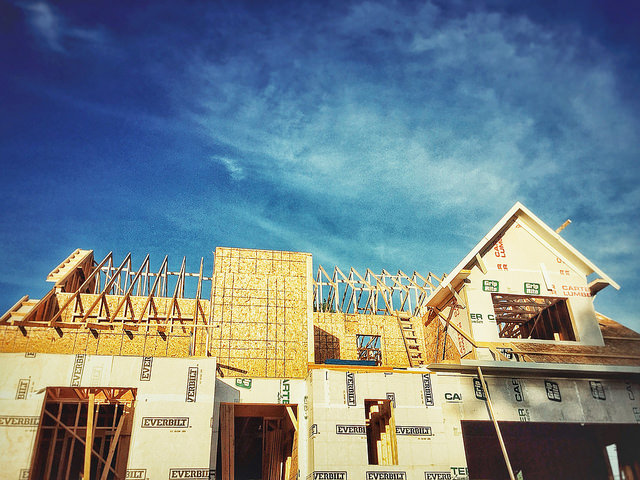
Construction of a wooden framework on a house under a blue sky.

Builders Expect Stronger New Home Market


The new home market is particularly important to the health of the overall housing market. That’s because any improvement in the number of new homes being built helps inventory levels, which also helps moderate prices and balance supply and demand. Currently, buyer demand is high and the number of homes available for sale is low. So now is a good time to keep an eye on what’s happening in the market for newly built homes. One good indicator of where the market stands is the National Association of Home Builders Housing Market Index. The survey asks builders for their perspective on current sales levels, buyer traffic, and the outlook for the next six months. The results are scored so that any number above 50 indicates more builders view conditions as good than poor. In June, the index rose two points to 60 – the highest reading since January. Robert Dietz, NAHB’s chief economist, says there are a number of indications that the housing market will improve during the second half of this year. “Rising home sales, an improving economy, and the fact that the HMI gauge measuring future sales expectations is running at an eight-month high are all positive factors indicating that the housing market should continue to move forward in the second half of 2016,†Dietz said. More here.

A CAT construction vehicle under a blue sky with clouds.

Mortgage Rates At Lowest Level In A Year


According to the Mortgage Bankers Association’s Weekly Applications Survey, the average contract interest rate for 30-year fixed-rate mortgages with conforming loan balances fell to its lowest level since January 2015 last week. Rates also dropped for loans backed by the Federal Housing Administration, loans with jumbo balances, and 15-year fixed-rate mortgages. Michael Fratantoni, MBA’s chief economist, told CNBC rates moved lower based on May’s job report and concern about economic volatility overseas. “Markets reacted to the weaker than anticipated job market report by recalibrating their expectations regarding the Fed’s next move. Additionally, global investors concerned about the potential for Brexit and its implications have once again led to a flight to safety, driving down Treasury yields,†Fratantoni said. “As a result, conventional mortgage rates dropped to their lowest levels since 2015 last week, while FHA rates dipped to their lowest level since 2013.†But despite favorable rates, demand for mortgage applications declined, falling 2.4 percent from one week earlier. Analysts say the fact that demand dropped last week has little to do with mortgage rates and is more likely a reflection of the fact that buyer demand is outpacing the supply of homes available for sale this spring. The MBA’s weekly survey has been conducted since 1990 and covers 75 percent of all retail residential mortgage applications. More here.

Red stylized geometric arrow symbol inside a black frame.

Outlook Finds Lenders Feeling Optimistic


Applying for a loan is often the first step a buyer makes toward becoming a homeowner. And, because lenders are a buyer’s first stop, they’re often the first to notice which way the housing market is trending. For this reason, Fannie Mae conducts a quarterly survey that gauges current mortgage activity and how optimistic lenders feel going into the next quarter. According to the results of the most recent survey, mortgage lender sentiment has rebounded after seeing declines in previous quarters. Doug Duncan, Fannie Mae’s senior vice president and chief economist, says lenders are feeling more optimistic but still cautious. “Key survey sentiment indicators suggest that lenders remain cautiously optimistic in their market outlook,†Duncan said. “The outlook for purchase demand growth over the next three months returned to levels similar to last year, while the outlook for refinance demand and profit margin improved moderately versus last year’s levels. Additionally, the trend toward easing of credit standards appears to be tapering off, as the vast majority of lenders, around 90 percent, reported plans to keep their credit standards about the same.†More here.

Close-up of a loan application under a pen.

Gov’t Scorecard Tracks Housing Health


The U.S. Department of Housing and Urban Development releases their Housing Scorecard each month in an effort to track key housing market data and the results of the government’s foreclosure mitigation programs. The comprehensive report covers new and existing home sales, mortgage rates, prices, foreclosures, and more. In May, the scorecard once again found encouraging signs that the market has improved. For example, new home sales hit an eight-year high in April, rising 23.8 percent over one year earlier. At the same time, sales of previously owned homes also rose due to solid gains in the Midwest and Northeast. The gains are significant as it is evidence that there remains a high level of buyer demand, despite affordability concerns caused by higher prices and fewer homes available for sale this spring. Part of the reason for that may be because mortgage rates remain near three-year lows. Historically low mortgage rates have been helping ease the effects of sharp price increases and they continue to entice interested buyers. Also in the report, foreclosure starts and completions fell again in April, continuing a long, downward trend caused, in part, by rising home values. Still, despite the encouraging signs, the report cautions that there is still work to be done to help the housing market and underwater homeowners who are still struggling. More here.

The White House under a clear, bright blue sky.

Older Homeowners Hold Key To The Future


There are more than 67 million current homeowners over the age of 55 in America today. That represents two-thirds of the nation’s home equity and a significant slice of the country’s existing housing stock. Whether these homeowners decide to move sometime soon or plan to stay in their current home through their retirement will have a big impact on the housing market, affordability, mortgage demand, and the homes that are available to younger, aspiring home buyers in the coming years. Because of this, Freddie Mac has launched a new survey aimed at uncovering baby boomers’ thoughts about homeownership and their plans for the future. According to the results, 63 percent of these homeowners say they’d prefer to age in place and large majorities say they are very satisfied with their homes, communities, and quality of life. But though the number who say they’d like to stay where they are is big, so is the number that say they’d like to move again. In fact, nearly 40 percent of respondents said they plan to move at some point in the future – that’s roughly 27 million Americans. Whether or not these homeowners do or don’t move, however, the only thing for sure is that their decision will have a lasting impact on the residential real-estate market for years to come. More here.

Close-up of a metallic key on a wooden surface.

New Homes Now 61% Bigger Than 40 Years Ago


In 2015, the median size of a completed single-family home was 2,467 square feet, according to new numbers from the U.S. Census Bureau’s annual Characteristics of New Housing. That’s 61 percent larger than it was 40 years ago and 11 percent bigger than a decade ago. And, in addition to the extra square footage, today’s new homes are also packed with more features than they used to have. For example, more than 90 percent of new homes built last year had air conditioning and at least two bathrooms. By comparison, a little less than half of the new homes built in 1975 had air conditioning and only 60 percent of them had two bathrooms. But along with becoming bigger, new homes have also climbed in price. In fact, the median sales price of new single-family homes sold last year was $296,400. That sets a new record and partly explains the reason why first-time home buyers have had difficulty finding affordable homes this spring. With the average new home selling for around $300,000, buyers looking for an affordable, starter home in many markets are limited to choosing from previously owned homes – as the majority of new homes are priced beyond their budget. Also in the report, among new homes built last year, 47 percent had four or more bedrooms, more than half were two stories, and a majority had two-car garages. More here.

A large modern house under a vibrant blue sky.

Home Loan Demand Spikes As Buyers Return


According to the Mortgage Bankers Association’s Weekly Applications Survey, mortgage application demand bounced back from a big drop two weeks ago, surging 9.3 percent last week. The increase included a 7 percent gain in refinance activity and a 12 percent spike in the number of Americans requesting applications for loans to buy homes. Still, industry analysts say demand for home purchase applications should be stronger considering the high level of buyer interest and mortgage rates that remain historically low. Last week, the average contract interest rate for 30-year fixed-rate mortgages with conforming loan balances fell slightly. At the same time, average rates were up for loans backed by the Federal Housing Administration and unchanged for mortgages with jumbo balances. Michael Fratantoni, MBA’s chief economist, told CNBC that despite expectations that the Fed would raise rates this month, May’s week jobs report may change that. “Given the weak employment report for May, we think it is unlikely that the Fed will raise rates in June,†Fratantoni said. “However, as other economic data are pointing to continued economic growth, we do expect that they will increase rates following their July meeting.†For now, though, average mortgage rates remain near three-year lows and are lower than they were at the same time last year. The MBA’s weekly survey has been conducted since 1990 and covers 75 percent of all retail residential mortgage applications. More here.

Bright orange arrow painted on textured concrete surface.

Thank you for your upload