

Banner
Menu

Tracking The Habits Of First-Time Home Buyers


First-time home buyers have always been an important demographic when tracking the housing market’s health. Whether or not younger Americans were buying homes, where they were buying, and in what numbers has been used to gauge trends and patterns that affect, not only first-time buyers, but everyone active in the real-estate market. Because of that, a new report from Genworth Financial analyzing first-time home buyer records back to 1994 is an important look at the who, what, where, and how of Americans buying their first home. Some of the highlights include the fact that first-time buyers bought more single-family homes during the first quarter of 2017 than during any other first quarter since 2005 and drove 85 percent of the housing market’s expansion from 2014 through 2016. In other words, the report found that there is currently a high level of demand among younger Americans. But it also found that many potential buyers have been unable to buy or have stayed out of the market due to misconceptions about what was required. Tian Liu, Genworth’s chief economist, says one of the main issues is the mistaken belief that a 20 percent down payment is required to buy. “By studying this group more closely, we hope to bring a better understanding about the many low down payment options available to help first-time home buyers reach homeownership sooner.†More here.


Abstract red spiral swirl with text about home buyers' top causes.

Homes May Be More Affordable Than You Think


Rising home prices have gotten a lot of attention over the past couple of years. In some places, they’ve even been said to have fully recovered from the housing crash. But a closer look at the numbers reveals a different story. Because many gauges of national home prices use averages to measure how much prices have gained or fallen, higher-priced homes have more weight and can skew the results. For a more accurate look, a recent study from Trulia compared a home’s current market value to its pre-recession peak instead. Their method found that just 34.2 percent of homes nationally have recovered their value. That means, though prices have definitely been rising, there are still a lot of homes that haven’t yet climbed all the way back. That’s good news for buyers but it also means there are many homeowners who are still waiting for their homes to regain value before they sell – which is why there are many markets where there are fewer homes available for sale than usual. Also, it should be noted that, as with anything real estate, where you are has a lot to do with the conditions you’ll find. For example, markets in the West and South have generally seen home prices increase faster than those in the Midwest and Northeast. More here.

Close-up of four $100 bills showing Benjamin Franklin's portrait and intricate designs.

More Americans Say It’s A Good Time To Sell


For most of the past several years, Americans considered the housing market more favorable to buyers than sellers. Even as home prices began to rise from their post-crash bottom, mortgage rates remained near all-time lows and offered buyers in most markets an affordable path to homeownership. However, according to the most recent results of Fannie Mae’s monthly Home Purchase Sentiment Index, the share of surveyed Americans who say now is a good time to sell a house has surpassed the number that say it’s a good time to buy for only the second time in the history of the index. Doug Duncan, Fannie Mae’s senior vice president and chief economist, says consumers think it’s time to sell. “High home prices have led many consumers to give us the first clear indication we’ve seen in the National Housing Survey’s seven-year history that they think it’s now a seller’s market,†Duncan says. “However, we continue to see a lack of housing supply as many potential sellers are unwilling or unable to put their homes on the market, perhaps due in part to concerns over finding an affordable replacement home.†But, if Americans think it’s a seller’s market and increasingly put their homes up for sale, buyers will begin to see prices moderate as added supply helps balance the market. More here.

American flag fluttering in a suburban front yard on a sunny day.

Mortgage Rates Fall To New Low For 2017


According to the Mortgage Bankers Association’s Weekly Applications Survey, average mortgage rates fell to a new low for the year last week, with drops seen across all loan categories. Rates declined for 30-year fixed-rate loans with both conforming and jumbo balances, loans backed by the Federal Housing Administration, and 15-year fixed-rate loans. With rates at their lowest level since last November, home buyers kicked into gear. In fact, the MBA’s purchase index – which measures the number of potential buyers requesting mortgage applications – rose 7.1 percent and is now 6 percent above where it was at the same time last year. Joel Kan, an MBA economist, told CNBC purchase application demand was at its highest level in 7 years. “Purchase application volume increased to its highest level since May 2010,†Kan said. “Refinance activity bumped up as well in response to moderating rates, but remained generally subdued.†The refinance index moved up just 3 percent, despite typically being more sensitive to mortgage rate fluctuations. Conducted since 1990, the MBA’s weekly survey covers 75 percent of all retail residential mortgage applications. More here.

A large arrow on a textured background with partial text above.

The Size Of American Homes Continues To Grow


It shouldn’t come as any surprise that American homes are generally getting bigger and adding more rooms. After all, who wouldn’t choose to have an extra bedroom or some additional storage space? Still, a look at the numbers, shows just how much our living spaces have changed over the years. For example, numbers from the U.S. Census Bureau’s 2016 Characteristics of New Housing show that the number of homes under 1,400 square feet has fallen 9 percent just since 2000. At the same time, the percentage of homes over 4,000-square feet has doubled. Sure, the majority of homes still fall somewhere between 1,800 and 2,400 square feet, but there is clearly a trend toward larger houses. Another way to look at it is the number of rooms. For example, 59 percent of homes now have three or more bathrooms. In 2000, it was closer to 20 percent. During the same time, most homes also upgraded from three bedrooms to four. Of course, along with the extra space, bedrooms, and bathrooms, the median sales price has also risen. Americans, however, clearly think the extra expense is worth the luxury of not having to schedule who gets the first shower in the morning. More here.

A modern building made of stacked shipping containers under a cloudy sky.

Survey Shows Homeownership’s Enduring Appeal


Buying a house, for many Americans, is seen as an achievement and evidence that they’ve reached a certain level of success. Put simply, there is no other symbol as closely association with the American Dream than owning a home. For Americans of all backgrounds and income levels, it has remained a shared aspiration. Because of this, there is a strong emotional pull toward buying a house that most Americans feel even today. Take a recent survey from the National Association of Home Builders as an example. The survey found that more than two-thirds of respondents said they believe owning a home is an essential part of achieving the American Dream. Granger MacDonald, NAHB’s chairman, says homeownership remains a priority for most of us. “Americans continue to place a high priority on homeownership and work hard to achieve this goal for their families,†MacDonald said. The survey’s results are consistent too. Over the years, and despite the ups-and-downs of the housing market, homeownership has consistently ranked high among Americans’ goals, whether it’s something they hope to achieve right now or a couple of years down the road. More here.

A charming two-story brick house with a well-kept lawn under a clear blue sky.

Why An Easy Commute Should Be On Your Wish List


If you’re thinking of buying a home and are spending all of your time dreaming of the type of kitchen you want or how big you’d like your master suite to be, there may be a thing or two to add to your wish list before you start your search. For example, have you considered the importance of having a short commute to work each day? Almost 11 million Americans drive an hour or more to work each way and the average commute has been getting longer over the past several years. So, if you’re lucky enough to have never sat in traffic after a long day at the office and don’t know just how draining it can be, here’s something to think about: A recent survey found a short commute or proximity to public transportation ranked second among factors people used when determining where to live. That means, only an area’s crime rate was deemed more important. In other words, having a long commute to-and-from work can negate some of the benefits of finding a great house. After all, what good is having the perfect kitchen, if you’re always on the road instead of at home enjoying it? More here.

Traffic jam on a cloudy day near a bridge with various vehicles.

What Pending Sales Numbers Mean For Buyers


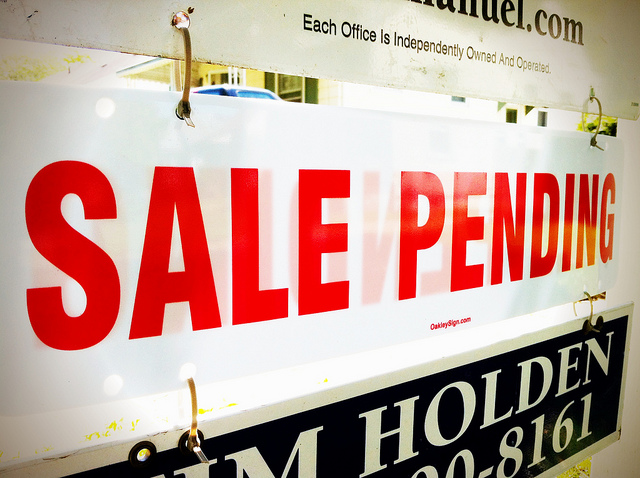
The National Association of Realtors’ Pending Home Sales Index is a good indication of where home sales will be a month or two down the road. That’s because, it measures the number of signed contracts that occurred during the month, rather than the number of closings. And since there is typically about a month between having an offer accepted and closing the deal, the number of pending sales can be a pretty accurate predictor of future home sales numbers. According to the most recent release, pending sales were down 1.3 percent in April from the month before. Lawrence Yun, NAR’s chief economist, says there may be fewer contracts signed as the spring goes on because of a lack of available listings. “Much of the country, for the second straight month, saw a pullback in pending sales as the rate of new listings continues to lag the quicker pace of homes coming off the market,†Yun said. In other words, the number of homes for sale can’t keep up with the number of buyers interested in buying them. That means, home buyers should expect to find competition for the homes that are available for sale this summer. More here.

Close-up of a 'Sale Pending' sign in red and white.

Average Rates Remain Near This Year’s Low


According to the Mortgage Bankers Association’s Weekly Applications Survey, average mortgage rates were largely unchanged last week. Loans backed by the Federal Housing Administration and 15-year fixed-rate mortgages both saw slight declines, while 30-year fixed-rate mortgages with both conforming and jumbo balances were unmoved. This follows the previous week’s results which showed mortgage rates at their lowest point so far this year. However, despite favorable rates, demand for mortgage applications was down from the previous week. Michael Fratantoni, MBA’s chief economist, told CNBC the reason may be inventory. “Home sales remain constrained by a lack of inventory across the country, as evidenced by home price growth running almost three times the pace of overall inflation,†Fratantoni said. Still, though fewer homes for sale may be holding sales back, mortgage application demand remains 7 percent higher than at the same time last year, which indicates strong interest from buyers this spring. The MBA’s weekly survey has been conducted since 1990 and covers 75 percent of all retail residential mortgage applications. More here.

Close-up of a bold percentage symbol on a warm background.

Renovations And The Cost Of Selling


It isn’t just the home’s buyer who has to settle up at the end of the closing process, sellers have costs too. In fact, according to one recent estimate, the average seller spends $15,000 before they hand over the keys to their home’s new owner. A big part of that is closing costs, agent commission, and any repairs required following the home’s inspection. But another chunk of that is renovations done before the sale. In fact, a large majority of homeowners fix up their homes before putting them on the market. Things like having the home painted, cleaned, and staged can add up for the 80 percent of homeowners who decide to spruce things up before showing their house. Nationally, the average cost of home improvements done before selling was $2,650, though that can vary greatly from region to region and is also dependent on the type of work that is done to get the house in shape. Of course, unlike buyers, home sellers have the sale of their home to help cover their costs but – assuming they’re going to buy another home – these expenses will obviously have an effect on how much money they have left over to put toward their next house. More here.

Close-up of a red Glidden interior paint can with a paintbrush beside it.

Thank you for your upload