

Banner
Menu

Survey Finds Average Mortgage Rates Down


According to the Mortgage Bankers Association’s Weekly Applications Survey, average mortgage rates fell across all loan categories last week, including 30-year fixed-rate mortgages with both conforming and jumbo balances, loans backed by the Federal Housing Administration, and 15-year fixed-rate loans. But despite lower rates, demand for mortgage applications actually fell from the week before. In fact, the Market Composite Index – which measures both refinance and purchase application demand – was down 3.5 percent from the week before. Lynn Fisher, MBA’s vice president of research and economics, told CNBC that the number of Americans requesting loan applications is still higher than last year, though things are slowing. “Purchase application volume continues to run ahead of last year’s pace, but after growing quite strongly in the first half of the year, the rate of improvement has decelerated this summer,†Fisher said. Still, mortgage applications to buy a house are up 6 percent from one year ago. Refinance demand, on the other hand, is 56 percent higher than last year. The MBA’s weekly survey has been conducted since 1990 and covers 75 percent of all retail residential mortgage applications. More here.
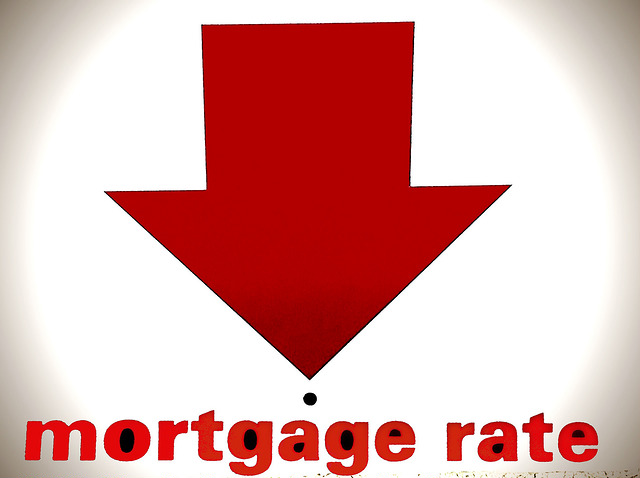

Red downward arrow indicating falling mortgage rates.

Majority Of Millennials Want To Buy A Home


Over the past few years, a lower-than-usual number of young Americans have been buying homes. Historically, first-time home buyers made up around 40 percent of all home sales. In recent years, however, the number has been hovering just above 30 percent. Still, survey after survey shows that – despite not being as active in the market – young Americans still want to become homeowners. In fact, according to a recent survey from the National Association of Home Builders, 81 percent of respondents between the ages of 18 and 29 said they want to buy a home. That, combined with the fact that nearly 40 percent of total participants said they would like to buy a home in the next three years, is encouraging news for the residential real-estate market. Ed Brady, NAHB’s chairman, says homeownership is still an important part of the American Dream. “The survey shows that most Americans believe that owning a home remains an integral part of the American Dream and that policymakers need to take active steps to encourage and protect homeownership,†Brady said. Americans agree. The survey also found 72 percent in favor of the government providing tax incentives to encourage homeownership. More here.

Colorful row houses under a bright blue sky.

Number Of Affordable Markets Increases


Last year, an analysis of 417 counties across the country found 82 of them less affordable than historically normal. The same analysis done this year showed 74 counties exceeding normal levels of affordability. That improvement, however small, is an indication that home prices are increasing at a somewhat slower pace this year. The data – from RealtyTrac’s Q2 2016 Home Affordability Index – looked at the percentage of average wages needed to make monthly mortgage payments on a median priced home with a 30-year fixed-rate loan and a 3 percent down payment. Daren Blomquist, RealtyTrac’s senior vice president, says there is good news to be found in the report. “Although nearly one in five U.S. housing markets was not affordable by historic standards in the second quarter, the good news is that affordability is improving compared to a year ago in the majority of markets thanks to a combination of slowing home price appreciation and accelerating wage growth, along with falling interest rates,†Blomquist said. “The average interest rate on a 30-year fixed-rate mortgage is down 37 basis points from a year ago, while annual wage growth accelerated compared to a year ago in 72 percent of the markets we analyzed and home price growth slowed compared to a year ago in 68 percent of the markets, including bellwether markets such as Los Angeles County, Miami-Dade County, Brooklyn, Dallas County, and San Francisco County.†More here.

Close-up of a green dollar sign symbol on a dark background.

Housing Trends Improve In Nearly Every State


The residential real estate market’s rebound following the housing crash has been gradual, with month-over-month volatility sometimes masking the fact that things were getting better one small step at a time. Year-over-year results, on the other hand, have consistently revealed the slow upward grind of housing markets across the country. As proof of that, Freddie Mac’s most recent Multi-Indicator Market Index – which compares current conditions to long-term norms in each of the 50 states and the top 100 metropolitan areas – found that 88 percent of metros are showing an improving three-month trend. Additionally, 46 of 50 states are trending upward. Len Kiefer, Freddie Mac’s deputy chief economist, says the improvement has been consistent, if varied from region to region. “Nationally, MiMi in May registered 85, a 7.3 percent year-over-year increase and the 49th consecutive month of year-over-year increases,†Kiefer said. “Many of the Western markets continue to see strong home sales. However, it’s the Southern states where MiMi continues to register some of the strongest gains buoyed by an improving employment picture. For example, the majority of Southern states showed stronger employment growth than the national average and all of the eight markets in Florida that MiMi tracks are now back to their historic benchmark levels of housing activity.†More here.

Vintage map of the United States showing major cities and highways.

Pending Sales Hold Steady In June


Pending home sales are an important indicator of the housing market’s health because they measure contract signings, not closings. Since signings typically precede closings by a few weeks, pending sales are seen as a good predictor of where future home sales numbers will fall. In June, the National Association of Realtors found pending sales up just 0.2 percent over the month before. Lawrence Yun, NAR’s chief economist, said there are not enough homes available for sale and it’s preventing interested buyers from taking advantage of otherwise favorable conditions. “With only the Northeast region have an adequate supply of homes for sale, the reoccurring dilemma of strained supply causing a run-up in home prices continues to play out in several markets, leading to the last two months reflecting a slight, early summer cool down after a very active spring,†Yun said. “Unfortunately for prospective buyers trying to take advantage of exceptionally low mortgage rates, housing inventory at the end of last month was down almost 6 percent from a year ago, and home prices are showing little evidence of slowing to a healthier pace that more closely mirrors wage and income growth.†Still, despite contract signings slowing in June, sales of previously owned homes are expected to finish the year at the highest annual pace in 10 years. More here.

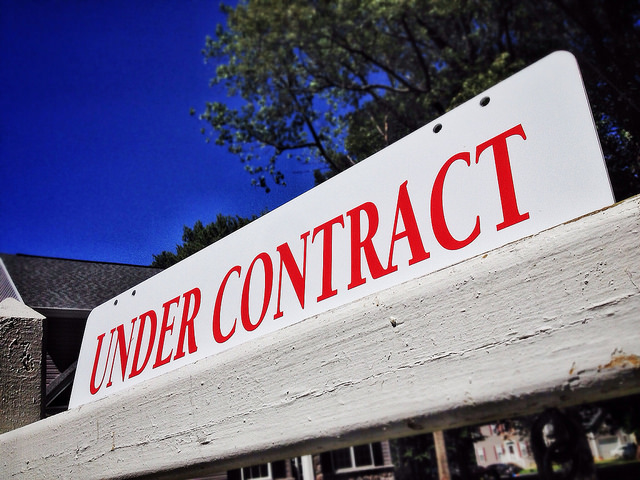
A sign reading 'UNDER CONTRACT' against a blue sky and tree background.

Mortgage Rates Increased Last Week


According to the Mortgage Bankers Association’s Weekly Applications Survey, average mortgage rates rose across all loan categories last week, including 30-year fixed-rate loans with both conforming and jumbo balances, loans backed by the Federal Housing Administration, and 15-year fixed-rate mortgages. The increase slowed mortgage demand, especially refinance activity. Michael Fratantoni, MBA’s chief economist, told CNBC activity has been up-and-down lately, despite the fact that rates are well below where they were last year at this time. “Despite the 30-year fixed mortgage rate being almost 50 basis points lower than a year ago, refinance activity has been extremely sensitive to rate increases as the pool of borrowers who can benefit from refinancing continues to diminish,†Fratantoni said. But it wasn’t just refinance activity, demand for loans to buy homes was also down, dropping 3 percent from the week before. Still, total mortgage application volume is up 42 percent from the same week one year ago. And though that increase can partly be credited to rising refinance demand spurred by declining mortgage rates, home sales are also up over last year. The MBA’s survey has been conducted weekly since 1990 and covers 75 percent of all retail residential mortgage applications. More here.

A worn yellow arrow painted on rough asphalt pointing upward.

New Home Sales Up 25% Over Last Year


In June, sales of newly built, single-family homes reached their highest level since 2008, according to new numbers from the U.S. Census Bureau and the Department of Housing and Urban Development. The 3.5 percent increase from May puts new home sales 25.4 percent higher than they were at the same time last year. Combined with increasing sales of previously owned homes and a bump in residential construction, the improvement indicates the housing market is gaining strength. In fact, not only were June’s figures higher than economists’ expected, May’s estimate was revised upward as well. However, despite the encouraging news, a closer look at the numbers shows the gains were not evenly distributed throughout the country. For example, the Midwest and West both saw increases of just over 10 percent. On the other hand, the Northeast fell 5.6 percent and the South was basically flat from the month before. Also in the report, the median price for a new home rose 6.1 percent from last year. The median sales price in June was $306,700; the average price was $358,200. But though prices were up, so was inventory. The number of new homes available for sale increased 1.2 percent over the month before. More here.

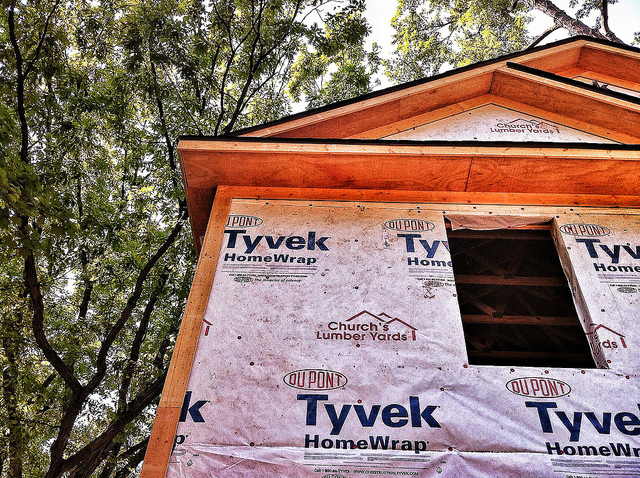
House under construction wrapped with Tyvek HomeWrap material.

Real Estate Remains Top Investment Choice


Any investment comes with its own set of risks. But, according to a new survey, Americans feel real estate is the safest place to invest their money long term. The survey, conducted by Bankrate, asked participants to choose what they felt would be the best place to invest money they wouldn’t need for the next 10 years. Results showed respondents chose real estate first among options that included the stock market, gold or precious metals, bonds, and cash investments such as savings and CDs. In addition, the survey found that real estate was the top choice across all age groups, with Americans between the ages of 26 and 35 just as likely as older participants to choose it over other investments. Behind real estate, cash investments came in a close second while the stock market tied for third with gold and precious metals. Considering the stock market’s recent record highs, it is somewhat surprising that it came in third. However, because stocks aren’t a tangible asset like real estate, they are often perceived as more tumultuous and risky. The results seem to indicate that Americans, after years of economic uncertainty, are feeling cautious and are turning to real estate, savings, and CDs because they provide a sense of stability stocks can’t match. More here.

Close-up of various US dollar bills featuring Andrew Jackson.

Housing Market Continues Down Familiar Path


The housing market has been fairly steady for quite a while now. Mortgage rates have stayed low while prices continue to rise. In many markets, there are too few homes available for sale – and though affordability conditions have been affected by increasing prices and tight inventory – an improved job market, low rates, and the growing number of Americans who say they want to buy a house have kept things moving forward. So what should you expect for the rest of this year? Well, according to Fannie Mae’s Economic and Strategic Research Group, more of the same. Doug Duncan, Fannie Mae’s chief economist, says they expect interest rates to remain low through next year helping to support continued gains for the real-estate market. “We still expect moderate housing expansion for 2016. While new home sales have pulled back from their expansion-best, existing home sales rose to the highest level in more than nine years amid the largest year-over-year drop in for-sale inventory since October of 2015,†Duncan said. “Without relief from new construction, housing inventory will likely remain tight, boosting home prices and constraining affordability.†In other words, the housing market should continue to see gains, though they will remain gradual until new home construction picks up and prices begin to moderate. More  here.

Close-up of yellow road lines on a forested mountain road.

Existing Home Sales Top Expectations


Sales of previously owned homes were expected to drop in June, following three consecutive months of gains. But, according to new numbers from the National Association of Realtors, home resales beat economists’ expectations and rose 1.1 percent from the month before. The improvement keeps sales at their highest annual pace since February 2007. Lawrence Yun, NAR’s chief economist, says the housing market has had a solid first half of the year. “Existing sales rose again last month as more traditional buyers and fewer investors were able to close on a home despite many competitive areas with unrelenting supply and demand imbalances,†Yun said. “Sustained job growth as well as this year’s descent in mortgage rates is undoubtedly driving the appetite for home purchase.†Mortgage rates still hovering near all-time lows may, indeed, be making a difference – especially where first-time home buyers are concerned. In June, for example, the share of first timers rose 3 percent and is now at its highest point in four years. Regionally, sales were up over last year in three of four regions, with the West running relatively even with one year earlier. Inventory, however, remains a concern. In June, the number of homes available for sale fell 0.9 percent and is now 5.8 percent lower than it was at the same time last year. More here.

Close-up of a "For Sale" sign with greenery in the background.

Thank you for your upload